
The changing tourism industry is expanding beyond simple travel and evolving into a field that connects new experiences and industries. Marine industries, sports, MICE, and global markets are increasingly linked with tourism, rapidly transforming the direction of the industry.
Amid these changes, Dong-Eui University, together with participating universities in the Global Tourism Shared University initiative, operated the “2026 Future Strategy Campus Linked Tourism Content Development Project,” a practical project designed to explore the future tourism industry from a new perspective.
Ⅰ. A New Perspective on the Future of Tourism
This project was operated for students from participating universities in the Global Tourism Shared University initiative, with collaboration between the host university and 20 partner universities. The project focused on discovering tourism content connected to Busan’s future strategic industries while strengthening students’ practical capabilities.
Rather than viewing tourism as a single industry, the project emphasized a multidisciplinary approach connecting tourism with marine industries, sports, ICT, design, and global markets. Through this structure, not only tourism and convention majors but also students from various academic backgrounds were able to participate, exchange perspectives, and develop new ideas together.
In addition, networking opportunities with public institutions, private companies, and startup experts allowed students to experience real industry trends and practical field insights more closely.
Ⅱ. Industry Experience and Future Insights at BPEX
The first Future Strategy Campus-linked program was held from March 26 to 27, 2026, at the Busan Port International Exhibition & Convention Center (BPEX). Students participated in sessions related to marine industries, knowledge service industries, startup ecosystems, sports tourism, and MICE, gaining direct insight into the changing direction of the future tourism industry.
Designated sessions such as “City Branding and Marine Tourism,” “Opportunities Connecting Sports and Tourism MICE,” and “Asia Future Campus 2” demonstrated how tourism is becoming connected with various industries. After attending the sessions, students developed their own tourism content ideas, experiencing the process of transforming industry insights into practical concepts.
With approximately 20 to 30 participating students, the program was operated not simply as a lecture-based event, but as an experience-centered project that encouraged students to explore new possibilities within the tourism industry.
Ⅲ. Connecting Ideas to Reality
The second tourism content idea presentation session was held on April 2, 2026, at the International Hall of Dong-Eui University’s Gaya Campus. Based on the insights gained from the Future Strategy Campus sessions, students planned and presented their own tourism content ideas.
Collaboration and idea exchange also played important roles throughout the project process. Participating students continuously shared opinions with teammates to refine their content, while feedback from judges helped them further develop and specify their ideas.
In particular, an organizer interview highlighted the “floating popup event” idea using Busan harbor boats as one of the most memorable concepts. By proposing a moving tourism space beyond traditional city-centered popups, the idea was highly evaluated for both its creativity and practical potential.
Students also discovered new perspectives and possibilities for interdisciplinary collaboration by observing other teams’ presentations, realizing that tourism content can become a field that connects various industries and people together.
Ⅳ. Beyond Tourism, Toward Broader Possibilities
This project carried significance beyond simply planning tourism content, as it allowed students to directly explore the connection between future industries and tourism. The diverse industry insights and field-centered experiences provided students with broader perspectives and new directions for thinking.
Through the project, students also realized the importance of professionalism and communication in tourism content creation, while expanding their perspectives by viewing cities and tourism through the eyes of others.
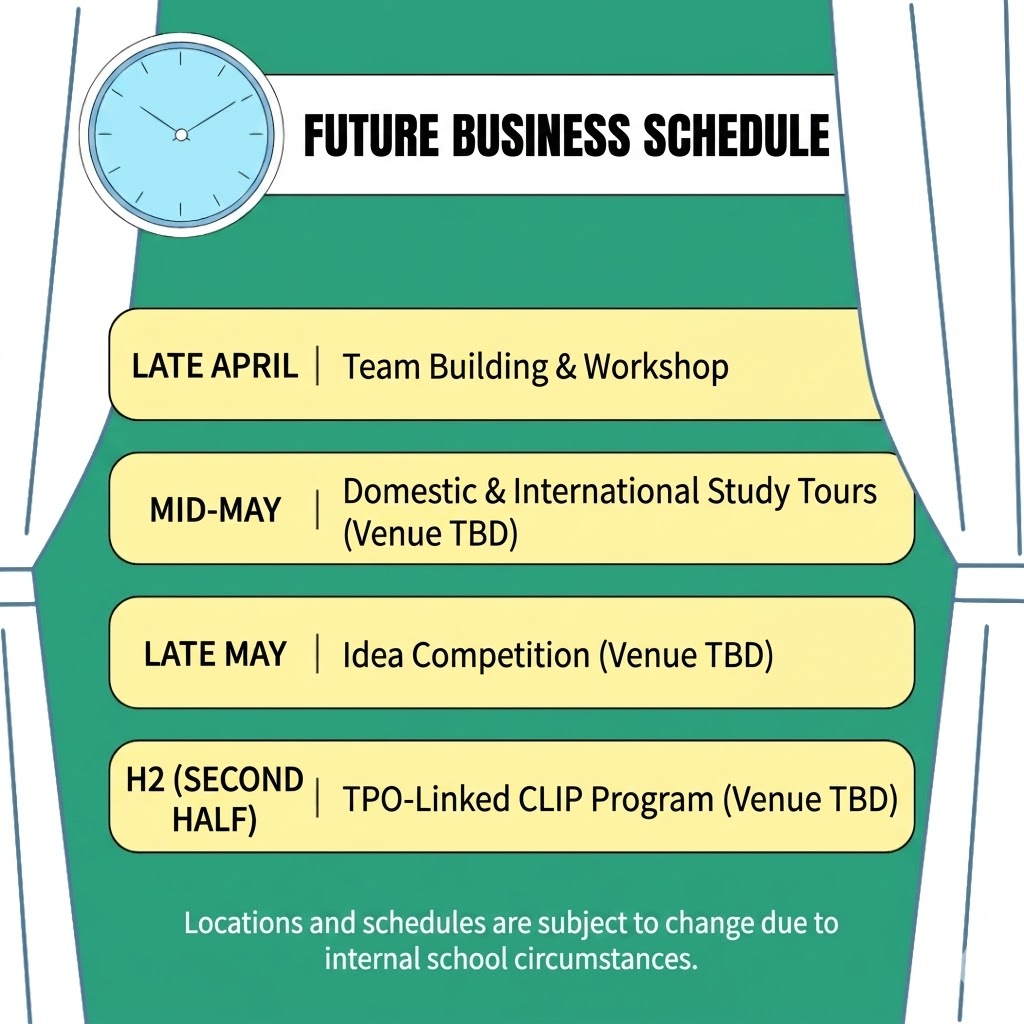
In the future, follow-up programs such as domestic and international field explorations for outstanding participants and the TPO-linked K-CLIP program are expected to continue, providing opportunities to strengthen global tourism skills and international communication
abilities.
Dong-Eui University plans to continue developing new approaches for fostering future tourism talent and discovering Busan-focused tourism content through projects that connect regions, industries, and student potential.
V. The Stroy of The Scene
We sat down with the project organizer to hear the detailed story behind this initiative.
Q1. (Planning Intent and Purpose) What was the specific background or objective behind planning this ‘2026 Future Strategy Campus-Linked Tourism Content Development Project’?
This program was specifically designed to provide students with firsthand experience in vivid industry practices and latest diverse trends, which are often difficult to encounter in standard university lectures. Furthermore, through the process of discussing and planning how to integrate these acquired insights into the tourism industry in teams, our ultimate objective was to strengthen their capabilities as ‘field-oriented tourism professionals’ equipped with both theoretical knowledge and practical acumen.
Q2. (Differentiation of Convergence Education) The project has been recognized as a “practical educational program that transcends traditional tourism majors by integrating diverse fields such as maritime affairs, ICT, and design.” What did you focus on the most while attempting this multi-disciplinary convergence?
We established the program’s direction based on the insight of Director Choo Seung-woo of the center, who noted that “tourism is a field that does not remain in a single domain but continuously converges with various industries.”
Aligned with the purpose of the ‘Future Strategy Campus’—where corporations, universities, and institutions in Busan and the Southeastern region gather to share trends—we aimed to provide lectures not only on tourism but also on the connection between maritime and knowledge service industries, as well as the integration of the increasingly popular sports sector with the tourism MICE field. This allowed students to approach the planning of Busan-customized tourism content from fresh perspectives. Furthermore, right from the student recruitment stage, we accepted both tourism/convention majors and non-majors alike, enabling them to exchange a rich variety of diverse ideas. (Omitted)
Q3. (Operational Performance) The project progressed step-by-step, from deriving insights in the first session to the final presentation and evaluation in the second session. From your perspective as the organizer, could you introduce any student ideas that were particularly impressive or highly sophisticated?
The most memorable concept was definitely the ‘On-Board Pop-Up Event.’
While there were many other excellent deliverables, the idea that demonstrated the highest feasibility was hosting pop-up stores on boats utilizing various ports in Busan. Generally, pop-up stores are conceived as events held in crowded urban centers or popular tourist destinations to attract crowds. However, the concept of utilizing idle boats when tours are not operating to host pop-up stores on the water was highly impressive. It was an exceptional experience in itself, and it successfully created a (omitted) ‘moving tourist attraction.’
Q4. Outstanding participants discovered through this project will be granted opportunities to participate in ‘Subsequent Regional Industry-Academia Cooperation Programs.’ How will the upcoming [Domestic and International Field Tech-Tour Programs] specifically link to this tourism content development project, and what synergy effects do you anticipate?
We plan to conduct domestic and international field tech-tour programs in the second half of the year, targeting top performers from the Future Strategy Campus and previous participants. In collaboration with our partner organization, TPO (Tourism Promotion Organization for Global Cities), we will execute the K-CLIP program. In the K-CLIP program, Korean and international students jointly experience Korean tourism, allowing them to verify foreign tourists’ perspectives firsthand on-site and establish themes for planning tourism content.
Through this program, we believe students will directly identify the inconveniences and areas of improvement for foreigners when designing tourism content. This will serve as an opportunity to cultivate communication skills, true to the name of the Global Talent Nurturing Center. It is expected to enable the cultivation of future tourism talents and the establishment of youth networks responsive to changes in the global tourism environment. Rather than concluding as a one-off event, we aim to enhance practical skills further by holding an idea competition based on the insights gained from the field.
We also met with the participating students to hear their firsthand stories and reviews of the program from their perspective. Students from Dong-eui University and Pukyong National University kindly shared their insights.
Q1. (Motivation for Participation) What motivated you to participate in this project, which brought together students from various universities and majors?
(Dong-eui University) My participation stemmed from a subtle personal sentiment rather than a grandiose motive. Since childhood, I have felt a deep sense of fulfillment whenever I saw people around me rejoice because of my actions, and this naturally developed into an interest in event planning and the convention field. I viewed this project as an opportunity to put that interest into practice, which led me to apply without hesitation.
Q2. The Future Strategy Campus session held at the Busan Port International Exhibition & Convention Center (BPEX) covered latest trends across highly diverse fields, including tourism, sports MICE, and global markets. Which session provided the greatest inspiration and assistance in conceptualizing and refining your team’s tourism content idea?
(Pukyong National University) The global market session was highly instrumental in refining our ideas. In planning our tourism content, incorporating the insight of international students within our team greatly aided our conceptualization. After analyzing the current status and realities of the global market within Busan, we devised our ideas by assuming various scenarios, such as utilizing foreign workforces and predicting future trends.
Q3. (Team Project & Mentoring) How did you collaborate with your teammates during the process of planning convergent content involving Maritime R&D, Blue Food, DX, and City Branding? Also, how did the expert mentoring and judges’ feedback help develop your ideas?
(Dong-eui University) During the content planning stage, I actively requested honest feedback from my teammates regarding my ideas. They pointed out elements I had overlooked from diverse angles, allowing me to further complement and develop the concepts. The feedback from the judges also served as a major turning point. Since our content aimed for a direction encompassing Asia as a whole, we received advice stressing the need to establish clear criteria regarding the domestic entry standards for foreign enterprises. That single piece of advice significantly enhanced the specificity of our content. Furthermore, watching other teams’ presentations made me realize that fusing our respective content could yield even more sophisticated results.
Q4. (Growth & Key Takeaways) In what area do you feel you have grown the most through this project, and how has it influenced your future career exploration inthe tourism and content sectors?
(Dong-eui University) While I intellectually understood how many components intertwine to create a single piece of content, experiencing it firsthand made me realize its gravity on a much larger scale. Witnessing that expertise is required even in seemingly minor details was the greatest takeaway of this project. Concurrently, I realized that looking at the world from perspective of others, rather than solely focusing on my own subjectivity, vastly broadens one’s horizons. In that process, I discovered potential I never knew I had and gained the courage to step forward. My desire to pursue work that makes people happy remains unchanged. This project reaffirmed that as many forms of happiness exist as there are diverse individuals, and I gained confidence that the tourism content field is the ideal stage to encapsulate that diversity.
(Pukyong National University) The area where I experienced the most significant growth was realizing the substantial gap between the view of a tourist and that of a local. Acquiring new information previously unknown to locals was a highly satisfying experience. The steady increase in tourists visiting Busan highlights the critical importance of uncovering new tourism resources—rather than merelyrelying on existing ones—to elevate Busan’s value as a tourist destination. For me, this project provided invaluable learning experiences in many respects.
We hope this project provided an opportunity for students to experience planning tourism content based on multidisciplinary insights. We anticipate that it served as a platform to uncover Busan-styled tourism content and future talents by strengthening their understanding of the tourism industry and field acumen through practical project experiences, while offering networking opportunities with professionals from public institutions, corporations, and startups